Web dashboard
LIVE
PelicanX
A weekly India fintech dashboard — payments, lending and wealthtech in one place, every figure marked with where it came from.
My Projects — 02
Open the live version, or read the story behind it — problem, what I shipped, what I'd do differently.
A weekly India fintech dashboard — payments, lending and wealthtech in one place, every figure marked with where it came from.
A household-staff ledger for Indian homes: who came, who's owed what, and when they're off — without the argument at the end of the month.
A grand-strategy simulation for future founders: run a post-seed SaaS start-up for 36 months from one command dashboard, and get graded on your judgment, not your luck.
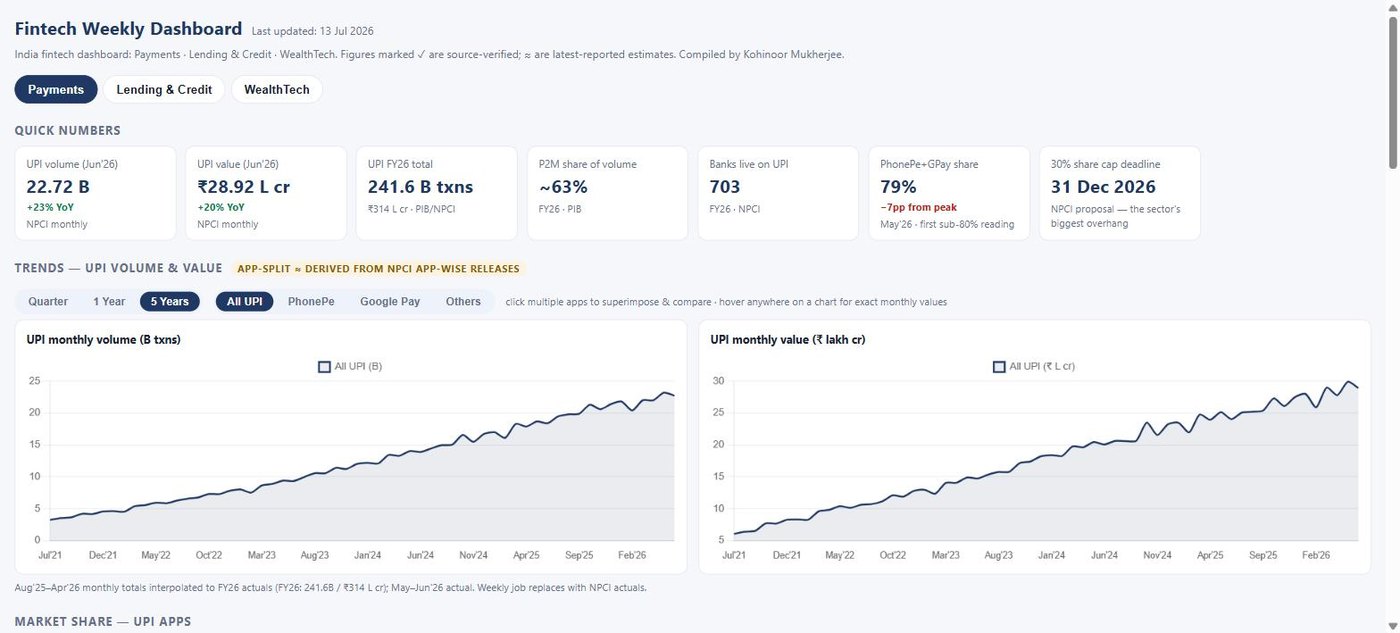
India's fintech numbers live in a dozen places — NPCI's monthly release, PIB notes, RBI circulars, company disclosures — and get quoted third-hand with no date and no source attached. If you want to know what UPI volume actually did last month, you either trust a headline or lose an afternoon.
Compilation is still manual, which caps both how often it refreshes and how far back the history goes. The next version should read the NPCI and PIB releases itself, so the weekly update stops being somebody's evening.
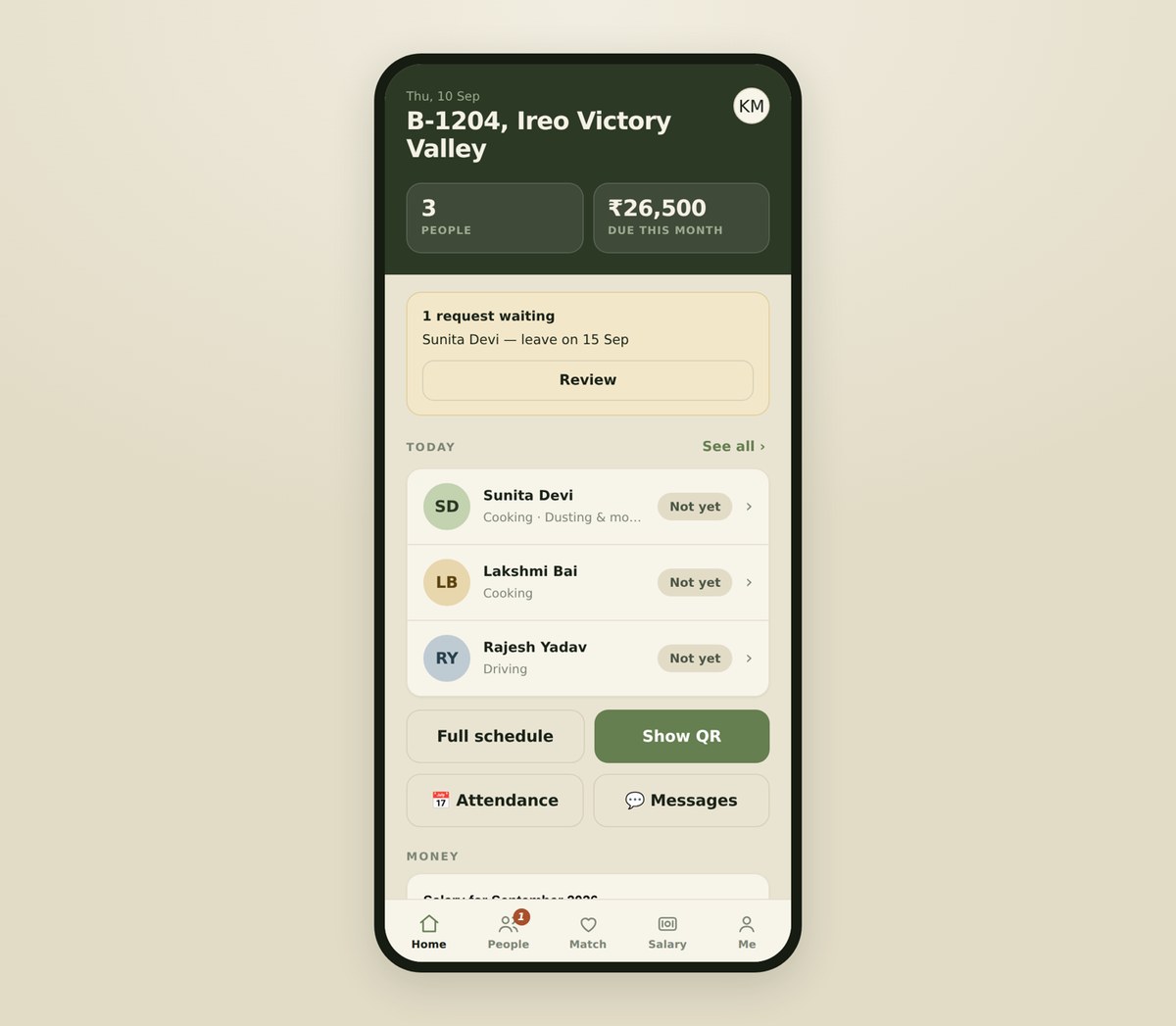
Most Indian households run on an informal arrangement with the people who work in them — a cook, a maid, a driver — and no record of any of it. Attendance is remembered rather than written down. Salary gets worked out at the end of the month from memory, minus some number of days nobody agreed to. That is the same argument, every month, in millions of homes.
ID capture is simulated and the matching side has no supply behind it — both are honest prototypes of a flow, not the thing itself. The next step is one real household running it for a full month and telling me what breaks.
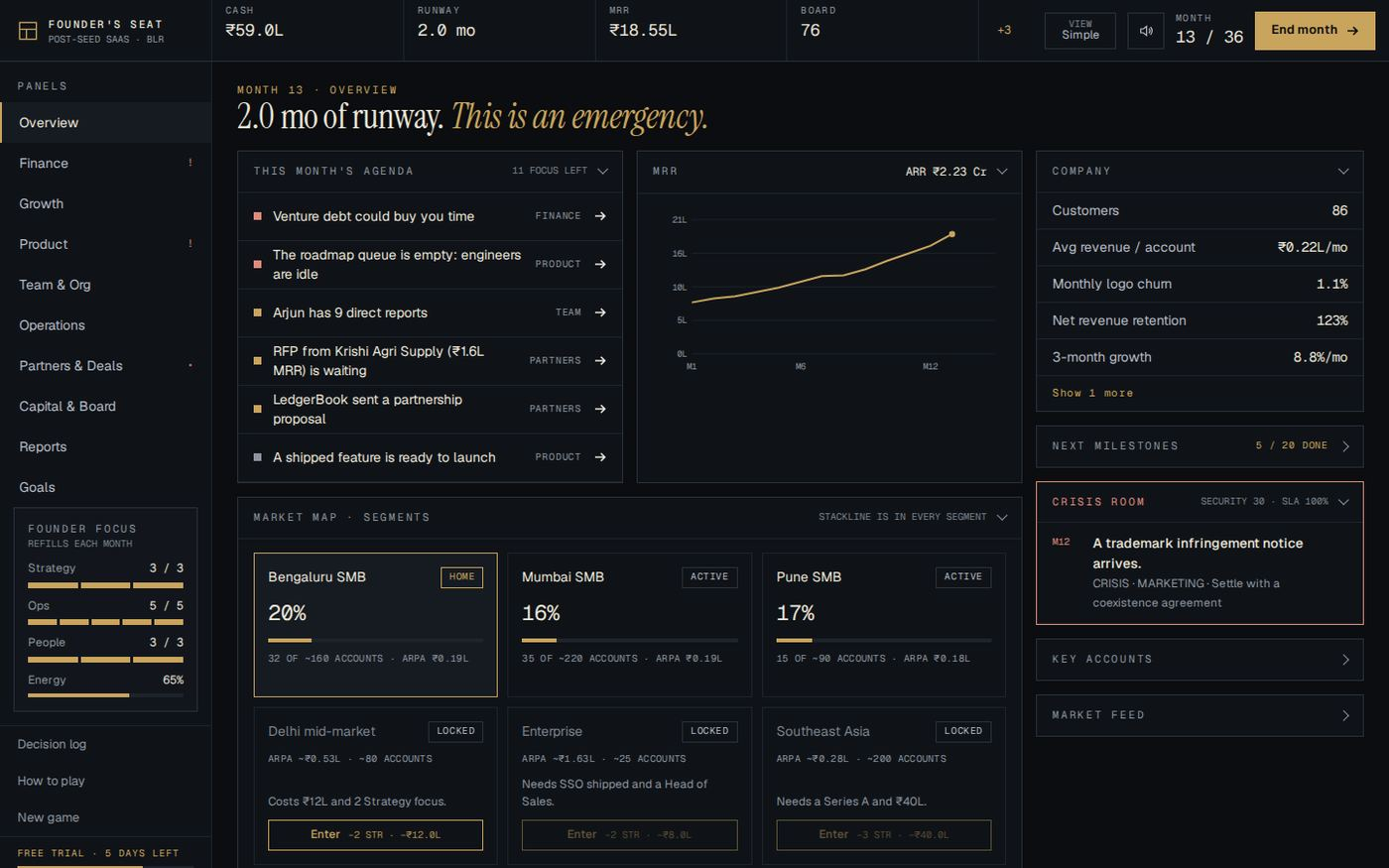
Case studies teach start-up decisions in hindsight: you read what the founder did and argue about it. What they rarely teach is the feel of the job — that every choice spends the same scarce cash and attention, that hires and fundraises take months to pay off, and that you have to commit before the numbers are clear. Most MBA students and founder's office hires meet that for the first time on the job.
The balance is tuned with scripted bots, not real players, so the first cohorts will find the exploits. Next is a faculty view of a whole cohort's decisions, and a shared market where classmates compete for the same customers.